When the Russians Ran Auschwitz
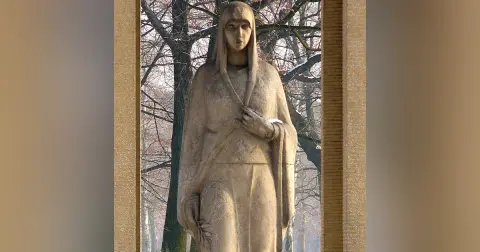
Growing up in 1920's Munich, Marianne had an idyllic childhood. Of it she writes: "since both my parents worked as artists - Father was an academically trained sculptor and Mother an academically trained craft artist I grew up in an apartment in an artists' studio building in Schwabing, surrounded by sculptures of naked little men and women, marble, plaster, and enormous boxes of clay." A few years later, she finds her family in Gleiwitz, modern-day Poland, with the Second World War nearing...


Growing up in 1920's Munich, Marianne had an idyllic childhood. Of it she writes: "since both my parents worked as artists - Father was an academically trained sculptor and Mother an academically trained craft artist I grew up in an apartment in an artists' studio building in Schwabing, surrounded by sculptures of naked little men and women, marble, plaster, and enormous boxes of clay."
A few years later, she finds her family in Gleiwitz, modern-day Poland, with the Second World War nearing its end. Caught between a retreating Germany and the advancing Russian army, she and her family find themselves fighting for survival, in a world on fire...
Image
"The Mourner" by Hanns Breitenbach (Marianne's father), in the Gliwice Linden Cemetery
Gliwi, CC BY-SA 4.0 <https://creativecommons.org/licenses/by-sa/4.0>, via Wikimedia Commons
Bibliography
DTA 647-1R Marianne Ottmann-Brietenbach. Deutsches Tagebucharchiv, Emmendingen. DTA Reg. Nr. 735-1,2
On April twenty first, nineteen forty-five, there was a knock at the door. Two men from Antifa show me a list that has my name on it. They told me to pack a backpack with bare essentials and follow them. During the night, Russian soldiers with rifles, slung over their shoulders, herded us into large trucks with tightly fastened tarps. We can see nothing, and no one knew where we were headed. At daybreak, we were pushed out of the vehicles and saw the outlines of a large gate, dimly illuminated by a spotlight that cast only a faint glow. However, the iron inscription above the entrance was clearly legible. Arbeit Macht Fry words that strike like hammer blows, yet I still do not understand. We are in Auschwitz, Jesus, Mary, we're in a concentration camp, screams a woman behind me. Her voice was cracking. Another crosses herself. Around me, the sounds of talking, praying, and weeping grow ever louder. Some faint. I could only stand there, paralyzed.
ThadOn June 6, 1944, D-Day is the largest seaborne invasion in history, setting the stage for the liberation of Western Europe from Nazi control. Within months, Hitler retreats to his bunker in Berlin, never to leave again. As World War II draws to its conclusion, families on the Eastern Front are caught between the retreating German war machine and the advancing Russian Red Army.
RobynOn January 18, 1945, the lights went out in our war welfare service office due to a power failure. So we had to say goodbye by candlelight to friends that we'd known for years. There was an oppressive silence, so we sang one last song together, had one last handshake. I was barely able to catch the last tram to Glavitsa, which was completely overcrowded. A soldier offered me his seat. When I looked around I saw tired, exhausted soldiers in ragged uniforms, most of them wounded, with very dirty and sometimes blood soaked bandages. Some soldiers did not even have boots on. All they had were cloths wrapped around their feet. I looked into expressionless faces, prematurely aged, and got a rising sense of fear. My God, I heard myself say, Where have you come from? From hell, Len replies, showing me the bloody bandage on his foot, which was around a torn army boot and had been wrapped. The others nod, then stare silently ahead again. I didn't dare ask any more questions. When the tram stopped, the soldiers were loaded into waiting ambulances. I had to stumble on through the darkness in a total blackout. Only the street lamps provided some light because the houses seemed deserted. My parents sat at the round table in the fireplace corner. They looked very pale. We didn't know what to do. Should we stay? Wait? Flee? A neighbor brought news that the front had collapsed and the Russians were advancing. I now understood where their soldiers had come from. Voices could be heard outside our house. I looked out the window and saw shadowy figures coming up the hill. There were armored vehicles carrying wounded men, military personnel, and Reichlabor service columns, in an endless procession. Everywhere, men with faces far too serious, some very young, like me, were overtired, freezing and dirty. The horses drawing wagons were shaggy and emaciated. This is the retreat, said Father, who had left his studio again and returned home. The night was bitterly cold, a typical eastern German winter night. I looked for a bag of biscuits, the last allocation of my weekly ration, and quickly brewed an enormous pot of tea and ran into the street with it. By that time, the ghostly procession had stopped. The horses stamped and neighed. Now and then fragments of speech passed between soldiers who were communicating from wagon to wagon. Two young officers leaned against our house wall, shivering with cold. I could see that they were wearing only thin coats, and they could hardly stand on their feet. In an instant I'm surrounded by soldiers. Eager hands reach out towards me with blue frozen fingers that can barely hold the teacup. I wondered why they didn't have gloves, scarves, and earmuffs. We collected and donated so much before Christmas. We sacrificed furs, knitted socks, and made wrist warmers through all those years of the war. The poster said everything for the troops. And here the soldiers were wearing summer uniforms. In January. Father invited two officers into our apartment. You can warm yourselves here, he said. I asked them where they were trying to go, and they just shrugged their shoulders. The room was warm, and the senior lieutenant was already sleeping in the armchair. The other officer raised his glass with us and toasted To final victory, bottoms up. We looked at one another because surely nobody was seriously believing in that anymore. Mother had brought in a third officer and two ordinary soldiers, because the table was large enough for everyone. The young lieutenant looked around the room and pointed out my childhood portrait. That's you, isn't it? Yes, it was me, eighteen years ago, I said. That's my age too, he said softly. I volunteered. I saw that there were tears in his eyes. I could not speak any more either. Something was choking my throat. The lieutenant noticed the piano, opened the lid, and played a few chords. Stopped again, looked at other paintings on the wall, and warmed himself by the fireplace. And now we're supposed to give all this up, he whispered. I held his arm and said, Tell me, is there really no hope left? He did not answer, only looked at me for a long time. The clock outside chimed a quarter of an hour. The senior lieutenant woke up, hastily finished his wine, and reached for his belt. He said, Thank you for this hour, and they were gone. The young lieutenant turned around once more. Things will get bad. Hold on, he said. My God, I sighed. As if in a trance, I cleared away the wine glasses and set them on the kitchen table. Suddenly, I understood that none of us had any chance left. We lay awake that night. I was so scared. I had crawled into bed with my parents. Distant artillery thunder was getting increasingly louder. The Russians are getting closer and closer, father said in a flat voice. I became terribly afraid, and towards morning we packed our rucksacks. My parents stowed valuables in the cellar and took the pictures down from the walls. I sat as though paralyzed on my bed, unable to decide what to take. The books, records, my beloved tennis racket, the oil paintings father had painted that were on the walls, and the many, many photograph albums. On the radio, slogans urged us to hold out. Damn it, why must we leave? Will we ever come back? Surely the Wehrmacht cannot abandon us. I packed, grabbing things at random, a book, underwear, photographs, a dress, shoes. It grew so noisy outside that I opened the window. Masses of people laden with luggage streamed along the street. There were screaming children with their dolls and teddy bears in their arms. My mother called me. Quick, we have to go. We hurriedly threw our bulging rucksacks onto my childhood sled and left. The streets were in chaos. There was a flying aircraft attack and bullets were hitting the pavement right beside my feet. Father pulled me aside and shielded me with his body. I did not recognize the danger, and I no longer knew where to go or stand. Everywhere we met bewildered, frightened people, and everyone was running in every direction. The party offices were empty. The Nazi bloc and cell leaders who only yesterday had so grandly ordered us to stay here, had long left. They had got not only themselves out, but their possessions to safety. We, it seemed, were caught in the trap. It was snowing, there was ice underfoot, our progress was painfully slow. Women and children who had tried to leave the city were coming back, as were retreating columns of soldiers. Everyone was confused. I asked an officer about the situation. No need to worry, the Russians are still far, but he couldn't finish his sentence. And the next instant the blast of a shell hurled us together against the hotel wall. Beside us a huge hole gaped in the facade. The officer no longer existed. A Stalin organ rocket launcher had literally torn him apart. In front of me was a cart, the horses reared and bolted, the driver fell off. People lay on the ground, mowed down by the rocket. I screamed with horror and panic. We ran for our lives, but mother collapsed. She'd undergone an operation only a few weeks before and was still very weak. Father carried her to my grandparents' house nearby while I dragged the rucksacks. My tears turned to ice on my face. It was thirty degrees below zero. My grandparents received us downstairs in the air raid cellar. The residents sat tightly packed on the shelter beds. They all had distraught, pale faces. A woman prayed aloud as shots struck the walls. Soldiers crowded into the cellar with us to warm themselves at the little stove. A detachment outside the house was supposed to defend the bridge only a few steps away. Grandfather had built the bridge many years ago when he was still a young, aspiring master builder, january twenty third, nineteen forty five. On the small stove in the air raid cellar, we made tea and pea soup every day and night for ourselves and the German soldiers there. We were a community sharing the same fate. Our city had become a frontline city, which means we are no longer allowed to leave our houses. The radio continues to broadcast slogans telling us to hold out. In the Rhyland the bombing war rages, horrified reports tumble one over another. In between the reports, though, there's cheerful popular music. I no longer understand this world. Eventually, the first severely wounded man was brought into the cellar. He had suffered a shot in the abdomen. While a medic tended to him, he lay groaning in a corner. The poor man had no chance left. A handsome soldier sat down behind me with a kind face and brilliant blue eyes. I have to wait here, he said almost apologetically. I can't shoot at all. I never learned. I'm an opera singer. They always only made me sing in the officer's mess. Yesterday they pushed a gun into my hand. Now I'm supposed to play the hero and wait for orders. He took some photographs out of his wallet. Look, that's me and Carmen. Magnificent costumes, aren't they? And he began to tell me about his life. A lieutenant came racing into the cellar, calling his soldiers together in panic. The order is to withdraw. The Russians have taken the nearby Audubon. We pleaded with him to take us on his trucks, but the officer told us that they were not allowed to. We recognized him as the manager of the department store, formerly the Zellner brothers, who were Jewish. It won't be so bad, he told Father and clicked his heels. Heil Hitler. Dear, dear God, my grandmother prayed, weeping, Hitler is abandoning us. All of the soldiers except one left us, and the opera singer disappeared into the house. They left their steel helmets and ammunition boxes in the street outside our entrance. January twenty fifth, nineteen forty five. As the tank battle raged on a nearby street, we felt heavy explosions and sat together mute with fear, each staring ahead. Toward noon, the moment arrived. The Russians are here. They pounded on the front door with their rifle butts. They're smashing my beautiful doors, grandpa said. He and father went to go meet the unfamiliar soldiers, but I screamed in mortal terror. Please don't leave us alone. My father turned and looked at me with infinite sadness. I'm not leaving you alone, but I must help the old man, he said, pointing to grandfather, who was hurrying down the stairs. Quietly he added, Whoever ventures into danger perishes in it. Those were to be his last words. The Russians storm into the house, shouting words we cannot understand, searching for German soldiers after seeing the ammunition boxes outside in the street. A soldier ordered my father to unlock to the ground floor apartment where a major of the uniformed police lived. His dress uniform was hanging in the hall, although he himself had long lived out. The Russian pointed at the uniform, looked at my father, and shot him as well as two neighbors who'd come over. One only just managed to run away and bring us the terrible news. No, I screamed. I heard the shots. I will never be able to forget them. My beloved father was killed. Never again will his masterly hand create a sculpture. Never again will I be able to visit him in the studio. He, who hated war so much, had now become a victim himself. Mother wanted to go to him, but drunken soldiers crowded in the cellar, blocked her way, and struck her with their rifle butts. I shall always hear her screams. An officer dragged her into an apartment above the cellar, passed my dead father, and raped her. A soldier of Asian appearance suddenly stood before me. I sat paralyzed on a crate, and was just about to end my life in this torment with a razor blade that father and I had bought for that purpose. I wanted to cut my wrist and had already begun to position the blade, but the Asian soldier took the blade away. Give bread, he said. Quick, an untouched loaf lay on the table. Give, he insisted. He broke it in half, examined it, and ate greedily. All the while he looked steadily at me. Now he's gonna hurt me, I thought, trembling all over. But he only stroked my head, gave me the breast of the bread back, and left. This soldier had saved my life. His comrade had shot my father. The opera singer had deserted, neighbors had given him civilian clothes, but now he lay dead in the courtyard. Who had shot him? The Russians? Had he shot himself, although he couldn't shoot at all? Or was it someone still in the German Wehrmacht? He will never sing again. Everything was so cruel that january twenty fifth. Then suddenly I felt a hand on my shoulder. Mother stood beside me. She was alive, and for her sake I needed to go on living as well. We embraced as though we would never let each other go again. More and more Russian soldiers entered our housing block and drove us out of the air raid cellar into the courtyard. They spoke to us in a language that we did not understand. They ordered us to go into our apartments, but grandfather distrusted them. He led us to an enclosure in a dark corner of a private cellar and walled us inside. Then he crawled into the tiny space with us and put the last brick in place from the inside. The enclosure had been intended for storing valuable pictures, but there had been no time to do that because of the events that had overtaken us. The building materials laying there became our lifeline. In this hiding place we were safe, but also trapped. For two days and two nights we lay on a heap of coal in total darkness. The flashlight had stopped working long ago. Thankfully, we still had some tea in our canteen and the iron ration, a kind of biscuit, only harder, which every German had received for an emergency. We relieved ourselves in the other corner and covered it with a little air raid sand that we found in one corner. Half stupefied with fear, we stared into space, until at some point we all fell asleep from exhaustion. Grandfather smelled the fire first and woke up. Then he woke us up, loosened some of the bricks, crawled into the cell cellar, and called urgently for us to follow. As I ventured into the stairwell, I saw clouds of smoke and flames. The house was burning. The Russians had set it alight, along with the surrounding houses. The makeshift hospital across the street was in flames too. What had become of the badly wounded men that were there and could not get out? Later it was said to have been Russian retaliation because German soldiers had allegedly shot a senior Russian officer. Revenge for revenge. Would it go on like this forever? Half unconscious from the smoke, we squeezed through openings in the walls between the air raid cellars. Our lives were in danger, and everything above us was burning. Nevertheless, mother ran back up to my grandparents' apartment to fetch the large album containing photographs of my father's works. Gasping for breath, she returned. The album was still intact. There's no sign of the Russian soldiers anymore, she whispered to me. We crawled from house to house. Since they all belonged to my grandfather, he knew where to find the openings to the cellars, which for the most part had only been lightly bricked up. Like a miracle, the CFIR ended before the last house. There were people who took us into their apartment, gave us their bed, fed us from fine porcelain, and let us use their bathroom, where water still came out of the tap. As though nothing had happened. We were so filthy we barely recognized each other. More and more people filled the apartment and we had to squeeze closer and closer together. All of us had suffered terribly over those last days. A woman recited the holy mass aloud, but almost nobody could even speak. We had become mute with horror. Some people's hair had even turned white overnight. My grandmother wept quietly. She had lost her handbag with her valuables and all her money, and I lost my right shoe while stumbling through the sea of flames. I wrapped my foot up thickly in cotton wool and found in the medicine cupboard of an abandoned apartment and tied my long woolen scarf around it. That afternoon, grandfather and I went back once more to our house where there were still flames on the roof. The apartments had already burned out and we couldn't save anything valuable, not even our rucksacks, but their precious keepsakes in the many volume family journal. We carefully went into the courtyard with grandfather holding my hand, as he always did when I was a child, firmly and protectively. In the rubble, I found a little sculpture of me at three years old. My father had made it as a gift to my mom's parents. It was now a melted lump of bronze. At that moment I felt as though my youth had melted down into a single lump of pain. I hated the man who murdered my father, and I hated Adolf Hitler, who had started this cruel war. For a long time grandfather stared into the repeatedly flaring fire that was consuming his life's work, his beautiful houses. We'd lost everything. Without papers, without identification, overnight we had become nameless refugees. January thirtieth, nineteen forty five was the anniversary of Hitler's seizure of power. In the Reich, they are still holding ceremonies, torch lit processions, although it is with dimmed torches because of the blackout. The radio continues to babble on about our imminent and final victory. Meanwhile, our city burns on every corner. Snow covered the bodies lying in the thousands in the streets, German and Russian soldiers, civilians, horses with torn open bodies and twisted legs. Horrified, we climbed over them and stumbled through the rubble of destroyed houses. The cotton wool and woolen scarf around my frostbitten feet are wet and clammy. It was a journey of horror and fear. Dead people everywhere, staring at us with their extinguished eyes. A soldier sat hunched on a projecting wall. I spoke to him, asked whether I could help him. But he was dead. His face was wax yellow and his hand was gripping his rifle tightly. I was so afraid I could barely breathe. Eventually we got to our house. The branches of the lime trees that I had loved so much lay charred among the shards of our window panes. An icy wind blew through the ruined, plundered rooms. There were splintered mirrors, overturned furniture, half burned books, and broken porcelain. I held my breath. Nothing stood in its place anymore except the wine glasses on the kitchen table. They stood just as I had set them down a few days earlier. The remains of the farewell drink had gone moldy. In our garden, and what had been a carnation bed, the residents had buried a German soldier they had found. In despair, in fear of captivity, he'd shot himself. One last look into the familiar rooms where the three of us had lived so happily. It was over. I stepped on shards everywhere. On the carpet in my room was the broken picture of the Reich youth leader Arthur Axmann. I felt betrayed because we had followed him so trustingly. Our flag was Means more than death, we had sung countless times. Now, on the outskirts of the city, rows of Hitler youth boys lie shot dead. Boys who'd been ordered into service as anti-aircraft auxiliaries. Fallen for Greater Germany? How different that sounds now. And I ask myself, how is it possible that so much evil stood just behind the facade of what we young people had perceived as good? It was bitterly cold and drafty in the apartment. Listen, they're shooting again, grandfather called. We have to go. We can't stay here. No water, no electricity. Do you hear Marianne? Yes, I heard, but I could no longer care about anything. Weeping, I went down the stairs. My tennis racket. It was still safe in the wardrobe. What for? There was a deathly silence in the house. Nearby, grandfather found emergency accommodations for all of us. It was empty, the family had fled in time. Grandfather had built this villa for them a few years ago. My friend Inga lived a few houses away, and when I went to see her she was sitting in the air raid cellar writing in her diary. We threw our arms around each other weeping. Her family had a grocery shop, and although it had been badly looted, she gave me a quantity of food and a pair of new boots that she herself had only received at Christmas. Her father had been taken away. He never returned from a labor excitement ordered by the Russians. Inga's mother sat upstairs in the kitchen on a chair, completely distraught, praying. February eleventh, nineteen forty five. There was still no water because most of the pipes had been destroyed. We had to fetch it from far away in cans and buckets. The Russians opened a tap in the street there for limited periods. A very thin stream flowed into our containers. Some people went away empty handed when the time was up. Restless nights, lying sleepless in unfamiliar beds. It was a strange, oppressive feeling to move around in somebody else's apartment. We treated all the things carefully. At that time we did not yet know that three weeks later the family's former Ukrainian maid would appear with her companions and empty the entire apartment. Nothing at all remained of what could be found in drawers and cupboards. The lady of the house had fled with her only child and a rucksack, leaving all of her valuables and furs behind. But the Ukrainian woman had overlooked one thing. Grandfather discovered several bottles in the finest wine under a great heap of coal. We took liberty of enjoying these precious drops, drinking them a sip at a time, like medicine. Ah, how good that did my grandparents. The wine was a tonic for body and soul. Looting was an everyday occurrence. The soldiers always found something else to carry away. Every time mother and I were terrified for our lives, for they also searched for women and girls and raped them. We often sat for hours, curled up in dark hiding places in the cellar or attic. When it became really dangerous, we slipped through the opening in the wall into the neighbor's house to visit people grandfather knew well. From now on, all radios had to be handed in and the houses were searched. Nevertheless, the neighbor's son Hans, who had not been drafted because of his disability from polio, managed to install a concealed radio in the cellar. Between the outer air raid window and the cellar wall now stood our only connection to the Reich. Every day we listened intently to the army report. There was talk of heavy fighting around us. The usual slogans continued to urge resistance with popular music in between. Not a word about Upper Silesia anymore. Apparently we'd been written off. Money had long since become worthless. All the banks and savings banks were burning. Bundles of thousand marked notes lay burning in the streets. Soldiers lit their cigarettes with them. There was nothing left to buy. We had no money, and we were hungry. Grandmother wept and prayed a great deal. Early one morning she slipped out of the house to go to church, which was actually forbidden. She did not come back, and we were desperate. On the third day she appeared at our door, utterly distraught. Soldiers had picked her up on the way and had taken her to their barracks. She had had to peel potatoes day and night. Her fingers were raw. She pulled potatoes out of every pocket, even out of the neckline of her dress. That's enough for a thin soup for us, she said tonelessly. By the end of february nineteen forty five, the antifascist party had emerged from underground and began to work with the Russians. First, everyone in the houses were registered. Later, Russian soldiers fetched them for work. Mother and I were taken to a Russian sewing shop at the end of the street towards the gondola pond, in a grand villa of the former Nazi district official. There, I reunited with several of my friends. We cried and rejoiced at the same time when we saw one another. Every one of us had endured days of horror. A Ukrainian tailor instructed us. Under his guidance, we had to make uniforms for Russian soldiers out of the uniforms of dead German Luftwaffe soldiers. The uniforms of the German soldiers lay on the floor in the middle of the room. We sat on chairs around them, and in our minds there were endless mountains of corpses. Often the smell of death still clinging to the fabric made us sick. In many a uniform jacket we found a farewell letter, our photographs, which grew wet with our tears. Ivan and Nikolai, two Ukrainian tailors, wanted us to sing, and so we did. We sang despite pain and despair. The Russian soldiers and officers who ran the sewing workshop were good to us because we worked well. They also fed us properly, nourishing food with meat, prepared in the villa's kitchen by one of our number, a professional cook, for the ten of us girls and the two tailors. Often we received so much that we could bring some home to our grandparents too. How happy they were, for they were growing weaker by the day. Now, at least sometimes they could eat their fill. In the morning, a guard fetched us and took us to the workshop. In the evenings we were escorted back. All day we had to work without stopping. Outside the workshop stood Russian soldiers from the front in their ragged, filthy uniforms, waiting for new ones. Many spoke German because they learned it at school. When we sang, they listened reverently. Some had tears in their eyes. They too were human beings, forced into war. They too thought of home in distant Russia, of wives and children, of their sweethearts. Dozens of times a day we had to sing Julishka from Budapest. Then they would jump up, laugh loudly, stamp the rhythm into the floor with their heavy boots, and clap their hands in time. I've been brought an accordion. Who can play? he asked. I've volunteered. Russian soldiers had stolen my own. From then on I had to play every day until my fingers hurt. It was an incomprehensible war, crying and playing the accordion, mourning and singing, fleeing, living, fear, love, and hatred. Yet also the comforting experience that amid all of that hatred there were people who came to us with good intentions. So it was with the staff of the Russian sewing workshop, who respected us. Of course we had to work, but on Easter Monday, the senior lieutenant gave us time off, and we spent the afternoon in the garden. The Russians gave us little colored sweets and a tiny piece of lamb. Grandmother made a wonderful roast from it that evening. We had to work more and more, faster and faster. The Red Army needed uniforms. Germans and Russians fought brutal battles. Both sides suffered heavy losses. Lieutenant Natasha, a Ukrainian woman who visited us daily in the workshop and sang with us, did not return from her assignment. We wept for her. She was such a kind and warm hearted person and never let us feel that we were prisoners. The noise of aircraft overhead made us very nervous. Would there be more attacks? We crept into the garden to see whether the planes were German or Russian. Only Russian ones were flying. Where was our Lufta? We could not know that there had long since been none left. On april fifteenth, nineteen forty five, there was great unrest spread throughout the workshop. The officers spoke excitedly among themselves. At last they told us the workshop was being closed. The army now needed every soldier and officer at the front. We turned pale with fear. What would become of us now? Ivan gave me a slip of paper with his address. If they deport you to Russia, come to my house. My Matka, my mother, will take you in. In his village near Kiev, Ivan had edited a daily newspaper as well as working as a tailor. Nikolai also gave us his address, just in case. God help us, don't let us be deported to Russia, we all thought. Then the senior lieutenant arrived. He told us to stand up and step outside. He shook each of us by the hand and thanked us for our good work. As farewell presents, each of us received seven pounds of meat, four loaves of bread, sugar, coffee, millet, buckwheat, tea, and from the doctor, extra precious medicines for headaches, throat infections, and colds. The highest ranking officer insisted on giving us a calf, which he dragged behind him on a rope. God only knows where he found it. You must slaughter and share it. And who knows when you'll have her have something else to eat again? We were moved. Sing, young ladies, they called. We were to sing while they loaded their trucks. Perhaps we'll be dead tomorrow. With voices choked by tears, we sang the song of Volga Boatman. Then they drove away, waving. Ivan, the old tailor, wept like a child. In the distance we heard the thunder of guns. The fighting must have been terrible. Now we stood in the street, and had to go home alone and unprotected, all of us afraid. We ran as fast as we could, with Trudel's father following behind with the calf. Because of a disability he was not serving in the Wehrmacht. In the next few days he planned to slaughter the animal and bring each of us our share for a condemned prisoner's last meal. By mid April nineteen forty five, the city was taken over by Polish administration, and the name was changed to Glavitsa. We were forced to hang white flags, bedsheets from the windows as a sign that we had surrendered. Food was available only on the black market by the Church of the Saints of Peter and Paul. Polish women sold what they themselves had managed to obtain from the baskets and shabby bags. One pound of butter for sixty Reichmarks, one loaf of bread for fifty Reichmarks. A single sweet cost ten. How grateful we were for food from our Russians at the sewing workshop. It meant there was very nourishing soup every day. That was especially important for my grandparents. At the same time we guarded these treasures from the looters who harassed us daily, until a Russian major moved into a neighboring house and we were under his protection. What good fortune. On april twentieth, nineteen forty five, the Fuhrer's birthday was being celebrated in the Reich with great ceremony. New soldiers and Hitler youth boys were being sworn in to protect the Fuhrer and fatherland. In the Reich, everything still went on as usual, but we had long since become a Polish city. Had Upper Silesia really been written off? We were desperate. One day there was a loud knock at the door. A Russian soldier held a piece of paper with mother's name and mine on it. Women, come, work detail. We had to clear up devastated apartments into which the Russian officers were to move with a small nail brush and a soldier gave me. I had to scrub the floorboards, but there was no soap. The Russians tore the curtains from the windows and made rags of them. Furniture, cupboards, and pianos were thrown out of windows and loaded into trucks. We had to clean utterly filthy, blocked toilets and bathrooms, sometimes with excrement in the bathtub. We were disgusted by it. On april twenty first, nineteen forty five, there was a knock at the door. Two men from Antifa show me a list that has my name on it. They told me to pack a backpack with bare essentials and follow them. Then they took me to an assembly point at Keith Courtyard, which was the location of a former barrack. At the meeting point, I see many familiar faces. There were about three hundred people, young girls and women, old men, two eleven year old boys, all haggard, ragged, and starving. Each person had their own harrowing experiences to recount. During the night, Russian soldiers with rifles slung over their shoulders, herded us into large trucks with tightly fastened tarps. We can see nothing, and no one knew where we were headed. There was a muffled sobbing, a woman with a rosary was praying out loud. At daybreak, we were pushed out of the vehicles and saw the outlines of a large gate, dimly illuminated by a spotlight that cast only a faint glow. However, the iron inscription above the entrance was clearly legible Arbeit Macht Frei Words that strike like hammer blows, yet I still do not understand. We are in Auschwitz, Jesus, Mary, we're in a concentration camp, screams a woman behind me. Her voice was cracking. Another crosses herself. Around me, the sounds of talking, praying, and weeping grow ever louder. Some faint. I could only stand there, paralyzed. My thoughts were in a chaotic whirl. What does this have to do with me? Why? A concentration camp? So it really exists? We had heard rumors lately, but never believed them. The soldiers push us further into the compound, which radiates a ghostly silence. A high ranking Russian officer calls out to us, You will do forced labor here. We stand there, shaken, terrified, bewildered. It's all beyond comprehension. And then we were led to wooden barracks of the former prisoners of the Auschwitz Birkenau concentration camp. April twenty third, nineteen forty five. I still cannot grasp it. I'm in Auschwitz. Traces of the inmates are still everywhere. A cap here, a shoe there, a tin bowl, a striped prisoner's jacket. The wooden bunks are grimy, the straw mattresses are coming apart and are thin. We are led through the complex. Here, too, traces of the horrific events remain. Devastation, filth, and barracks. Barracks as far as the eye can see. We are all shaken and deeply affected by the sheer scale of this gigantic slave labor complex. The camp commandant speaks of a total area exceeding one hundred and seventy five hectares. I settle into my sleeping quarters, the barrack bunks are stacked too high, with twenty five people to a room. I take an upper bed right next to the door. We all know one another, so at least that's a comfort. From this day on, we share a common fate. Gallow's humor begins to spread, and we resign ourselves to the inevitable. Cut off from the world, now imprisoned behind three layers of barbed wire, these endless camp roads we traverse daily. It is likely twenty kilometers from our barracks to our respective work sites. In all of the weather, we work on dismantling the IG Farben plant, which is attached to the concentration camp. Martial law has been imposed, leaving a grim situation for the defeated. Nutrition is utterly inadequate, though the Russian soldiers serve as guards at Auschwitz do not have much to eat either. New forced laborers arrive daily, from the Suditan land, from surrounding villages. Everywhere there are work details overseen by Russian foremen and guard soldiers. Most of them are very strict, especially the young Soviet soldiers, only a little older than I am. But if you work well and don't draw attention to yourself, you have nothing to fear. On April twenty sixth, we were awoken at 6 AM. Get up, you damned wretch, shouts Boris, the camp's overseer, grinning as he does so. This includes petty acts of harassment, like knocking over buckets of water, though it isn't tap water, but rather the contents of a chamber pot. We call it our collected works. After a roll call that lasted at least an hour, we queued up at the supply depot. Every morning we get two slices of bread there, one for breakfast and one for supper. Along with that a spoonful of musty tasting beef jam or brown sugar, which I greedily look up at once, is placed inside my cupped hand. To drink, there's a tin mug of black malt coffee. At midday we get a ladle of cabbage or beetroot soup from the field kitchen on the factory grounds. Sometimes a piece of horse lung floats in as meat addition. I eat it even though I have to force myself to. We found the tin bowls in the lockers of former inmates. They were dented and unsightly. We scoured them clean with dirt. How strange my silver spoon, which I had brought from home, looks by comparison, like a relic from a civilized time gone by. I just don't think about it. April twenty seventh, nineteen forty five. It's been a few days now, and there's still no water. Before evacuating the concentration camp, the SS blew up the pipes. Every morning we fetch water for the kitchen early on, using highly questionable tin buckets from an air raid pond some distance away, which smells musty. I am terribly tired. We are only allowed four hours of sleep. Before that, we take turns doing kitchen duty barrack by barrack. We peel rotten rotting beetroots and chopped cabbage for the lunch menu. Sometimes, in an unguarded moment, we eat the raw tubers, but afterwards we always feel dreadfully sick. Today, in an empty barrack, I found the suitcase of a former Jew classmate of mine. One day she simply stopped showing up for class. Now I know she was here. What could have happened to her? To whom did all those leather shoes and pair of glasses that I saw belong? When we buried an old gentleman who had blood poisoning from the adjacent barrack two days ago, we came across skeletal remains. The work gang leader kept digging and found a mass grave. It was in a spot beneath three large poplar trees on a rise. We had no way to help the man. He had injured himself while working, and the wound was tightening. Besides, he was diabetic. They say there will soon be an infirmary barrack with a doctor or medic. So many of us are sick. We all have festering wounds. The vermin are practically eating us alive. We scratch ourselves raw. Lice, lice. The barrack walls are covered with fat bed bugs packed tightly together, like wallpapers that suddenly come to life. There are quite a few among us who have lost our minds. They are making a racket in separate barracks. One man screams incessantly, I am not a Nazi, I was not part of the party. We just can't stand it anymore. May first, Labor Day. The soldiers shout at us. Work sets you free. Others cry work and thank your fur. Boris issues daily threats, grinning as he does so. Whoever doesn't do good work then and points to the three gallows standing in the square in front of the barracks. A lovely prospect. Hunger is growing ever more intense and the psychological strain is immense. What has happened during all this time here? And we knew nothing of it. And even if we had, we wouldn't have believed it. Are we standing here now, bearing the burden of the atrocities committed by others? What will they do to us? It's been about three weeks and my boots are spar starting to split at the toes. Some of us are already wearing the wooden clogs of former prisoners. We are making the same shuffling sound across the concrete paths that thousands of prisoners made before us who walked around in their despair, their misery, their fear. There's nothing but dust and concrete all around us. We are now working under the supervision of different guards, rough men from the Urals and the Caucasus. We haul massive loads of rubble, heavy beams, and railroad tracks for the new line. Under the guidance of, fortunately, friendly and considerate engineers, we dismantle huge machines from the IG Farb implant and hammer steel structures free for transport to Siberia. What is happening in the rest of Germany? Is the fighting still going on? We hear nothing. No one believes in the final victory that was once constantly proclaimed, nor do they believe the Wehrmark can retake Upper Silesia. It seems as though we are lost. May sixth, nineteen forty five. Starting today, I am working far out along the line, assigned to the railroad brigade. There are thirty of us women and girls, plus a Polish woman who acts as an interpreter. Peter, from Georgia, is our foreman. He has a fearsome temper, very strict. We have to build new railway embankments. The connection to the railway network needs to be restored as quickly as possible, heading towards the Soviet Union. For us, this means grueling earthworks using spades. Where are we supposed to find the strength? I mustn't give up. I want to survive. We encourage one another. I look after a little twelve year old, Louise Maria, in our brigade. She misses her mother terribly. Her mother is back in the city, expecting a baby. I am so happy that my mother is here. She came along voluntarily. She didn't want to leave me alone. A mother's love. Everyone envies me for it. But now I'm afraid for her. She is so frail and this damned work is so hard. Will she hold out? I have a severe case of tonsillitis, and today I had a fainting spell. A young Russian officer gave me a big dollop of hot mashed potatoes from his mess tin, telling me to spear it on my throat. I'd much rather eat it, but he insists on this remedy. Using large leaves grown by the railway embankment, he applies a sort of bandage. The next day he brings me some medicine to swallow. He speaks to me, and I'm afraid of Peter. Conversations are forbidden on pain of punishment. But Peter stands at attention before this officer, salutes, and makes some sort of report. He looks so clean and neat, not a speck on his uniform, his boots were gleaming. He was a student before joining the Red Army, and he speaks good German. His name is Michael. He must hold a high rank. He's always friendly to us and never shouts. It is such a relief. It's been raining for days, and Michael brings us empty cement sacks which we pull over our heads. We fool around as Peter spits out sunflower seeds. May eighth, nineteen forty five. Armistice In the middle of the night, Russian soldiers stagger into our barracks dead drunk. We wake up. What's happening? Laughing and roaring, they sit on our bunks, holding vodka bottles to our lips, forcing us to drink. Drink, drink. The war is over. Then they dance wildly, pull us off our straw mattresses in their joy and spin us around. We get scared. Then the door opens. It was Mikhail. We are reassured. Nothing now nothing can happen. The Ivans are leaving the barracks. Mikhail's beaming, his fur hat cocked jauntily over one ear. Mariana, the war is over. Soon I'll be going home to Moscow. And you'll be going home too. I think home? Where is that? Our house burned down. My father is dead. We've lost everything. He takes my hand. You'll see. Everything will turn out fine for you and your mamma. He strokes Mooti's hair and says softly, Mamushka. Mikhail, my father is dead. The soldiers shot him. He looks at me very seriously. Russian soldiers sought your father, and German soldiers shot my only brother. He was a doctor at the front. This is a cursed war. But it's over now. Yes, the war is over, the senseless killing has stopped. Yet we still cannot bring ourselves to rejoice. No one speaks. Everyone is quietly weeping. Today we were counted at least five times until we could barely stand anymore. Then Boris, the camp conodant, arrived, looking at a group for minutes, not saying a word. He pulled a list from his pocket and read out the sentences to be sure served by German soldiers, officers, and men of the SS and RAD, Reich Labor Service, currently in Russian captivity. An interpreter translates. Some women collapse in tears. Ten years, fifteen years, twenty five years. For some, this means an endlessly long separation from one another. I think of my friends and relatives. What will happen to them? My God, Mikhail's no longer here. He's overseeing the transport of the dismantled machinery to Siberia. It's a shame. We trusted him. June twenty fifth, nineteen forty five. Peter was transferred, so we have a new foreman again. The new one was a university professor in Kiev who speaks perfect German. During the lunch break he sits with us and talks a great deal. We finally learn something about the Reich, which has been reduced to rubble and ashes. Berlin, Hamburg, Cologne, all of our cities are said to be destroyed. Even my beloved Munich, my birthplace. He also tells us about the Battle of Stalingrad. The conversations we have with him are so good, they make this dreary camp routine a little easier to bear. july thirteenth, nineteen forty five. I haven't written in a long time. My pencil is worn down and there's no paper left. The professor promises to get me a writing pad and a pencil, but it isn't easy. I sacrificed my bread ration for the middleman, as the professor calls him with a laugh. He works in administrative office with the administrative complex, where SS guards used to live. I feel such a strong urge to write down everything I'm experiencing during these difficult days. Life beyond the barbed wire seems to be returning to normal. The polls have been granted administration of Upper Silesia. The names of our cities have now been changed, and our forced labor remains under Russian control. We have a new camp commandant in charge of the entire camp, a fatherly sort of man who treats us all fairly. Boris, however, the camp boss from Birkenau, is still here. But he isn't as fierce anymore, even though he still calls us damned wretches every morning at wake up time. From time to time we gaze longingly through the wire mesh of the camp fence at the meadows and fields in the distance. I see farmers harvesting crops, spot horses and cows grazing, and children playing. What a peaceful scene. It's painful to watch, yet it offers hope that one day we may be free again. It's summer, and we are still wearing winter clothes. August first, nineteen forty five. We remain in captivity, but suddenly we're receiving money for our work. It's hard to comprehend. We are told that under an international agreement we will henceforth receive a work permit and a weekly sum, which turns out to be minuscule for our forced labor, paid to us by a Russian administrative clerk. That means queuing up yet again after the work day is over. From now on, accompanied by a soldier, a girl is allowed to shop once a week at a Polish kiosk outside the main gate on behalf of the entire barracks contingent. For a weekly wage, one can get four cigarettes or some tobacco, a few sticky candies, and perhaps a tiny pickle, or if one is lucky, some fruit. Today I decided on an apple that was still quite unripe, but what a delight. I use my small, broken pocket knife to slice it into paper thin slivers and use them as topping for my bread in the evenings. A truly refreshing treat. The other woman mostly buys cigarettes. August fourteenth, nineteen forty five. It's mom's forty third birthday. I give her three little flowering chamomile stalks that I found amidst the rubble. Today they are more precious than a bouquet of roses used to be. The barracks community sings a song, the professor brings a portion of delicious buckwheat groats in his mess tin, topped with sugar and butter. It's touching. Our clothes are in tatters, no needle, no thread, we can't mend anything, just hold larger holes together with fine wire. The water pipes have been patched up, we get the precious liquid flows only sparingly and is rationed to boot. Oh, but to be able to take a proper bath again, with soap and plenty of water to wash my hair again? We all have lice. It's so depressing. Compassionate soldiers occasionally treat us to a cup of drinking water in this heat. Dog days, and almost all of us are wearing thick wool sweaters. We lost the buttons on our coats, jackets, and blouses long ago. The old men in the camp walk around with their flies open. None of us has a safety pin to give them. We women are resourceful. Using colorful cable cords found in factory halls, we fashion snail like shapes and attach them to our clothes with wire to serve as makeshift buttons. Others use the cords to knock colorful little bags with handles to hold in our tin balls, which we jokingly call our fine china. You can buy a sort of pouch for carrying two rations of bread or jam, unless of course you make one yourself. August twentieth, nineteen forty five. I have a fever of forty degrees, probably typhus. I'm allowed to stay in the barracks. Alosha, the slightly older Bessariban guard, sits on the floor in front of my bunk and prays for me. You will get well again, little dove, he says in broken German. Have patience. He holds his rifle in his arms and sings a strange sounding melody, swaying his head back and forth. That's what Mamushka did when Alosha was sick, he says. Then he rambles on about his dacha back home and his goat, and wonders if they've brought the harvest in yet, even though everyone is working in the factory because of the terrible war. Tears streamed down his face. Then he goes off to get me some water, because I am so thirsty. In the evening, a gypsy woman from the next barracks visits me. She had breoted concoction from grasses and herbs and made me drink it. It was hell, but after a few hours I was able to get up. The fever was slowly subsiding. None of us knew this gypsy woman. Was she a miracle healer? She taught us girls to look for herbs growing along the railway embankment, herbs we could eat without getting sick, and all the while she kept muttering words to herself. I asked her what she was saying and she looked at me. Necessity teaches us to leap, to weep, and sing songs. It's an ancient gypsy proverb. I thought about it for a long time. We are in a state of great excitement. Dora threw herself from a watch tower. She did not want to live anymore. We miss her and her sister is distraught. August twenty fifth, nineteen forty five. More and more German prisoners of war passing through our camp, Birkenau. The professor speaks of forty thousand German, Hungarian, and Austrian soldiers who are to be transported to Russia in a few weeks. We are not allowed to speak to them. Some women recognize their husbands, girls, their brothers, or boyfriends. Then they run over, stretching out their arms longingly towards them, only to be immediately torn away by the guards. Rifle butts come into play. Not allowed, they shout. The soldiers of the German army, now the defeated, are left utterly defenseless and at the mercy of others. Heart wrenching scenes unfold. Nevertheless, we secretly share our bread with them, even if we get beaten on the back for it afterwards. Whenever the soldiers are marched past us, I hold out my tin bowl of soup to them. They grab for it greedily, even fighting amongst themselves for it. I can hardly bear to look, and I'm shaken by how wretched they appear. And now Russian captivity lies ahead for them too, perhaps for years, or decades. How many of them will ever return at all? These impressions wear me down. I'm infinitely sad. For Muti, this is already the second war that she has lived through. She is becoming quieter and quieter beside me, and I am so afraid for her. She is the only thing I have left in this world. September nineteen forty five. Typhus is in the camp. Everyone is in a panic. A sense of catastrophe prevails among us and among the Russians too. There's no medicine. My work brigade is being disbanded. The camp commandant thanks us very cordially, shaking our hands for the work we've done. We are astonished by this gesture. From today on, trains carrying machine parts will be rolling to Siberia daily. Something is in the air. There are hardly any scheduled work assignments anymore. Anyone who is healthy gets put to work somewhere, but food rations are getting smaller and smaller. We are starving. The Soviet soldiers don't have much either. Is it a supply issue? The gypsy woman says find sorrel and make soup. We find succulent stalks in the meadow outside the camp fence, and the dilapidated factory halls there are still bricks and sheet metal. Two bricks, a sheet of metal on top, some wood and dry leaves underneath, and the cooking spot is ready. We beg matches from the guards, we find pots in the abandoned kitchens. Soon the soup is steaming. Alosha gives me a small packet of salt he found in the storeroom. Feodor, the giant from the caucasus, hauls in a sack of half rotten rutabagas. A precious find. Every now and then an officer adds some bread to the mix. September nineteenth, nineteen forty five. Hunger edema in our arms and legs, wounds that fester and ache. We are growing weaker, nervous, and irritable. The daily trek to the work brigades, which keeps changing, is becoming increasingly difficult for us. Camp order threatens to fall apart completely. We see Allied officers walking around in the camp. It's true. Americans, British, and French soldiers in smart uniforms all highly decorated. They watch us as we work in silence. What does this mean? October nineteen forty five. I can no longer write down an exact date. My internal calendar has gone haywire. Is today Tuesday? Or Sunday? Wednesday? I have no idea. There's only today or tomorrow. Mom has a hairline fracture in her left foot and is in great pain. A heavy beam started rolling straight over her foot, which she couldn't pull away in time. A young man carries her on his shoulders while we walk to our work sites, and we give him some of our bread in return. The whole group chips in. The professor assigned Mom work so she can do it while she's seated. She sorts nails and screws by size and type. For days on end I carry heavy planks to a collection point. I have severe back pain and my shoulders are raw. In the night I have a dream. I walk through a large gate into a soothing light blue landscape. Wishful thinking shaping my dream? Or already a delusion? Freedom? Death? What does it mean? In the evening, Eva and Gertrude sit on their straw mattress and use a pendulum. Margit's wedding rings hang from a piece of string swinging over a prayer book. The question is will we be released or deported? All of the while we are supposed to be quietly reciting the Lord's prayer. The pendulum swings in response to the question. Dear God, let it be true. But a rumor is circulating in the camp that we are to be transported to Siberia to help assemble machine parts. We are all afraid. We won't survive this. Or is it just another rumor? The professor reassures us. He says that if it were typhus, the camp would likely be disbanded. The critically ill are being taken away. Where to? Nobody knows. Now Maria has come down with it. She's lying in the barracks next door with terrible abdominal pain, and we cannot help her. Mid november nineteen forty five Or was it? I haven't written a word for a long time. I injured my right hand while carrying iron grates. An iron bar fell over and landed on my fingers. Besides, I'd run out of pencil lead, the notebook was full, but I was also out of soap, and I had only a tiny fragment of comb for my thick long hair which was slowly matting, and I had lost all hope. I was becoming apathetic. Mom cried a lot. Time and again it was the professor who spoke quietly to us and kept our spirits up. One day he told us the camp was being disbanded, but it wasn't true. Just a rumor. Now typhus had broken out in the barracks opposite ours too. So far we've been spared. But for how long? Most of the officers and guards no longer show their faces. Are they afraid of infection? Where are they now? Only now and then does someone come by to give orders. A foreman we don't know leads us to a factory shed. He is friendly, allows us breaks and talks to us. He's from Stalingrad and has also lost everything. The dam war, it affects both sides. In reality there are no victors. We have all lost. Late November. Conditions are becoming miserable again. It is bitterly cold in the barracks, drafts blow through every crack, work has all but stopped. We get nothing but a cup of black malt coffee and dry bread twice a day, sometimes whole loaves that we share. But the bread is slimy and sits in our stomachs like a stone. There hasn't been any sugar or jam for a long time. Muti often has nosebleeds. How do we deal with it? There's no tissues, no toilet paper, no sanitary pads, leaves have to serve for everything. Our spirits are at rock bottom. One day the older women sit together and pray, and Rosa reads the Holy Mass from her prayer book. My arms are covered in festering sores, I have edema in my legs, fluid retention. My boots feel tight. Today we were allowed to shower. Right after the Ukrainian women who usually occupy the washrooms, they also allowed us a bath. Why? Even though the soldiers were watching us, we didn't care about anything. Admittedly, the tap was turned off after a short while, but for a while we were clean, even without soap. So from this point on, uh Marianne is recounting the advance later from memory. She's writing it about a year later. And she says almost a year has passed. One day, even earlier than usual, Boris arrived in the morning. Get up, quick, he bellowed as always, but without the customary damned wrenches. A one hour roll call, reading of names, and administrative clerk once again pressed a slip of paper into her hands, covered in stamps and signatures. The camp commandant took his place in the center of the yard and shouted, his voice echoing loudly, not along the interpreter in this time, but in perfectly clear German. In the name of the Commandant, you are released. Go home. Go quickly. He grinned and walked away. We looked at each other. Say that again? Released? Then how do we get out of here? How do we get home? It's too far to walk, and I have no money for the train. Is it even running again? After all, everything was destroyed. And where are those who no longer have a home supposed to go? Our thoughts were racing. Boris appeared uninterested. He had no instructions whatsoever. His mission was over. The paternal one, the commander, didn't show up either. We panicked and could not be happy at all yet. I don't think we understood it all. Then he came. The professor ran up, Theodore and Alosha behind him. You are free. The professor's voice cracked. Listen up. We will take you home voluntarily. We will work for the Polish railway and organize a train. Quickly, pack your things. That was done quickly, because we didn't own anything. And then it started. We formed up one last time. An endless march through the camp streets began. In front is the professor, his rifle shouldered, his fur hat askew on his head. At the side is Fidor, the giant, who once again, crazy with arrogance, shot into the air. At the back, Alosha finishes slowly and carefully. You see, my little dove, now you can go home. And Alosha is going home soon too. He said that to each and every one of us. But first we will travel with you. We had to laugh at his formulation. Oh, he'd always meant so well to us. We had to stop again and again. Throughout this time we had become weak. Eerie silence on the camp streets, where so many soldiers would otherwise be, and officers running around and telling us to go faster. We passed the rubble of those blown up by the SS gas chambers, the railway tracks, exploited factory halls that are as quiet as houses of the dead before us. Don't give up now. We always had to take breaks, like we were exhausted. Mom and I walked hand in hand, as if in a trance, silent. We are free, we rejoiced. But skepticism immediately arose. Really free? Or were there trains somewhere that took us to Siberia? The slogans had already changed enough, and then at some point we got closer. We had long since lost the sense of time. We had kilometers of barracks camps that had finally been abandoned. In the brick houses the officers were now accommodated, and here they were. They were all standing at the windows. We looked up anxiously, expecting insults, but they laughed and shouted goodbye to us. They threw candy and apples, and also cigarettes. Some even came down and brought us white bread and sausage. We couldn't at all believe that they were the same officers who visited us during the many months of forced labor and had not been treating us kindly. Now they were all waving. They called again and again. Goodbye. Some even shook hands with us. We were just amazed. No Siberia? And then we called back and laughed also. The whole world suddenly looked different. Only one first lieutenant shouted with a serious face. We Russians give you freedom again, and no gas chamber. Don't forget that. That hit my heart. We became quiet again, ashamed at that moment for those who committed those atrocities in Auschwitz. After a while, we actually stood in front of this. It was not a dream, it was a large gate with the inscription Arbat Macht Fry, through which we went back that we had come in. There was an eternity in between. Fedor opened the heavy iron bars. We were free.


